
CAL 2026

About the conference
We cordially invite you to the 24th annual traditional conference Cognition and Artificial Life 2026. The conference represents a friendly and open environment for meeting and sharing knowledge between experts working in various areas of cognitive science. The aim is also to create a space for the presentation of contributions, their professional discussion in a transdisciplinary context and establishing cooperation with experts from various fields.
The conference is intended primarily for researchers and doctoral and master's students.
We cordially invite you to send your abstracts of contributions focused on research of the mind and cognitive processes from the perspective of philosophy, psychology, linguistics, anthropology, neuroscience, computer science, artificial intelligence, robotics and other related fields. Accepted contributions will be published in the peer-reviewed conference proceedings with their own ISBN.
We look forward to meeting you at the end of May in Třešť.
Dedication
This year's conference commemorates the five-year anniversary of the death of the prominent Czech cybernetics expert Ivan M. Havel, who made significant contributions to the popularization, research, and teaching of cognitive science in the Czech Republic.
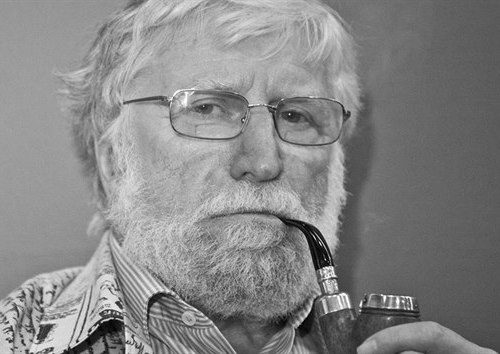
The conference's guests of honor will be RNDr. Dagmar Havlová, CSc., mathematician and widow of Ivan M. Havel, and Prof. Ing. Václav Hlaváč, CSc., a friend of Ivan M. Havel, who is working at the Czech Institute of Informatics, Robotics and Cybernetics at the Czech Technical University, where he focuses on robotics and machine perception.
Premises
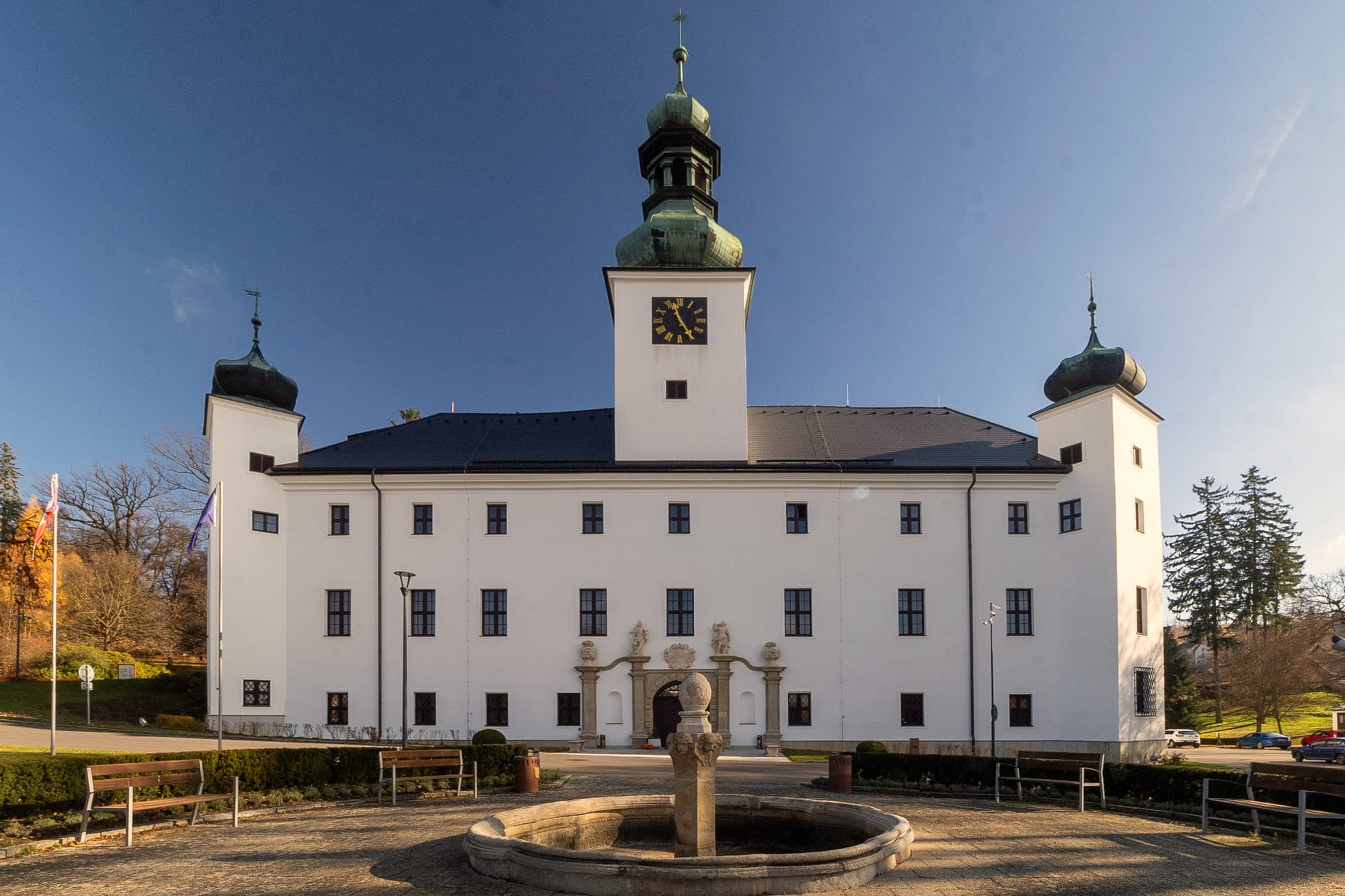
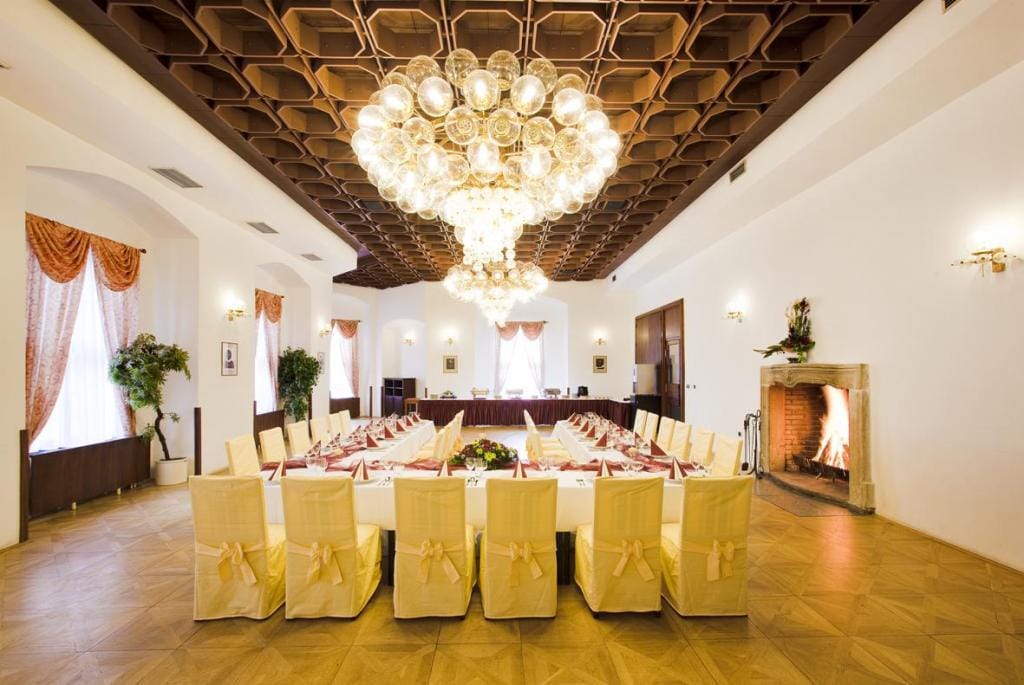
As the venue for the conference, we have chosen the picturesque town of Třešť, which is attractive for its accessibility from the Czech and Slovak Republics and has hosted our conference twice before.
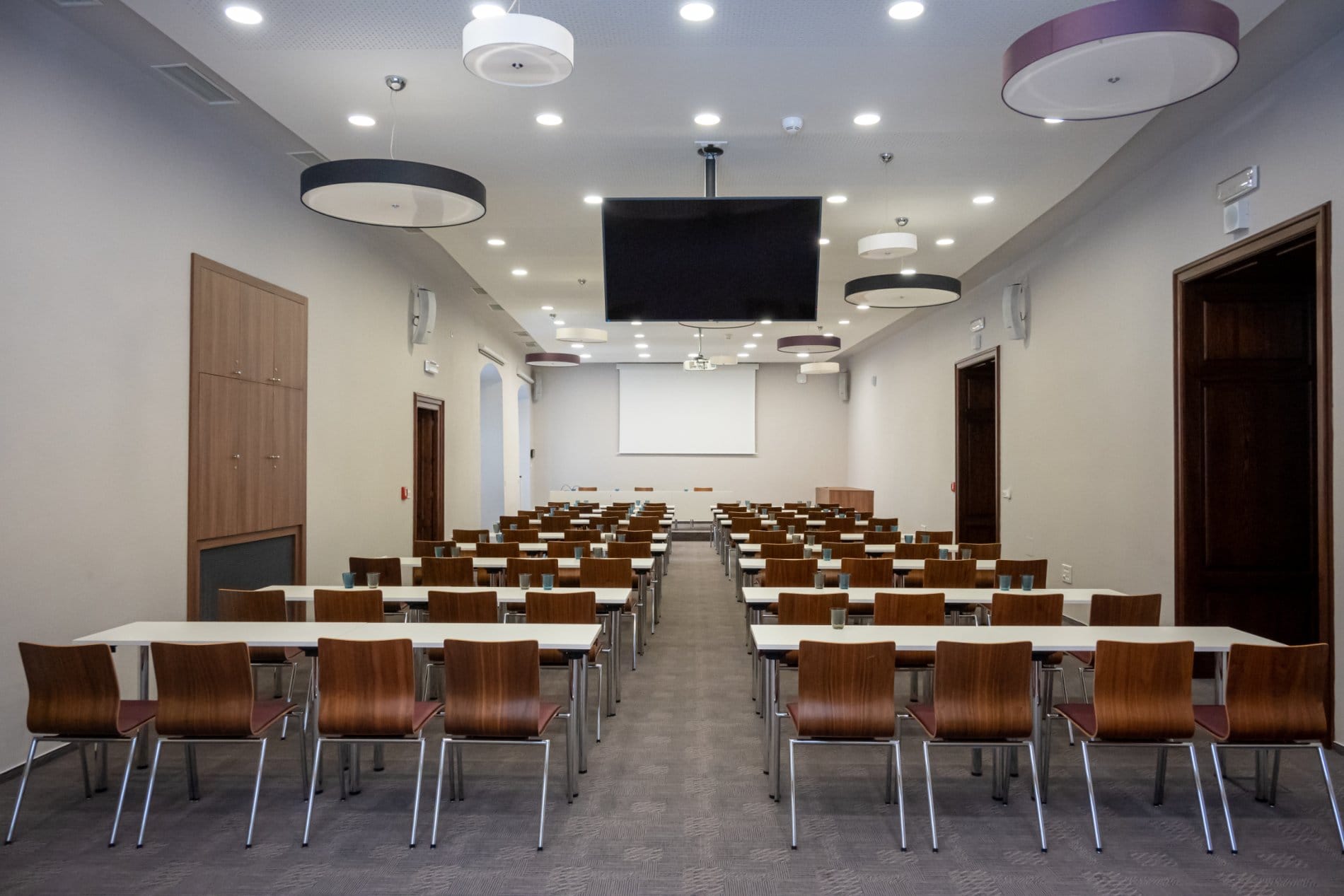
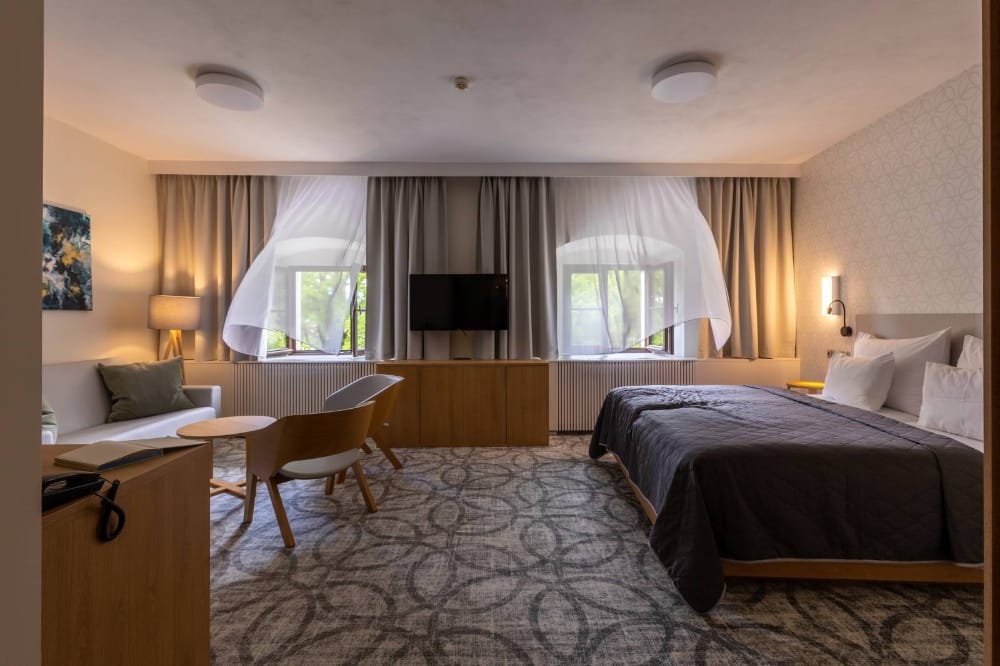
The conference will be held in the representative premises of the neo-Renaissance castle in the city center. The picturesque castle grounds offer modernly equipped conference halls and accommodation. Participants can look forward to catering in the elegant castle premises, including breakfast, lunch and dinner buffets. Wireless internet access (Wi-Fi) will be available throughout the conference.
How to get there
Dr. Richtra 234
589 01 Třešť
Czech Republic
GPS 49°17'40.689"N, 15°29'14.647"E
Parking will be available on site.
Important Dates
- Submission of papers and their abstracts: 14. 3. 2026
- Notification of paper acceptance no later than: 22. 3. 2026
- Opening of registration for participants: 13. 4. 2026
- Submission of full paper text: till 1. 5. 2026
- Conference registration and payment of the registration fee: till 8. 5. 2026
- Deadline for sending reviews to authors: 22.5. 2026
- Submission of the final version of the paper: till 31. 5. 2026
- Conference dates: 25. 5.–27. 5. 2026 (Monday to Wednesday)
Keynote Speakers
Prof. Jamin Pelkey

Prof. Jamin Pelkey, PhD is Full Professor in the Department of Languages, Literatures & Cultures at Toronto Metropolitan University and a core member of the TMU–York University Joint Graduate Program in Communication & Culture. He currently serves as President of the International Association for Cognitive Semiotics (2022–2026) and previously served as President of the International Cognitive Linguistics Association (2023–2025).
His research focuses on questions of language and meaning and employs mixed methods to investigate the relationships between patterns of embodied experience and the evolution of human consciousness—from extreme ideologies to the creative imagination. His work integrates insights from linguistics, poetics, anthropology, psychology, and philosophy, interpreting symbolic systems across cultures in order to better understand cross-cultural paradoxes and reversals related to belief, knowledge, aesthetic experience, and the meaning of life. Prof. Pelkey is an award-winning teacher and researcher, recipient of multiple prestigious research grants and academic honors, and the author of numerous influential publications in semiotics, cognitive science, and linguistics.
Submission
Alteroception and the Divided Brain: Embodied Blending from Imagination to Ideology
When we experience another person’s movement as if we were them, this is known as alteroception. Projections of such experiences onto inanimate spaces provide meaningful networks of criss-crossing relations that owe their dynamic structure to the evolution of upright posture. A series of cross-cultural, trans-historical examples of these patterns at work offer insight into the evolution of language and the origins of human consciousness from imagination to ideology. Recent studies in the neuroscience of brain lateralization suggest that the interplay between these two facets of human nature grows out of radically distinct ways of paying attention to the world. I argue that it is necessary to consider all of these relationships interdependently in order to make sense of human cognition and its consequences.
Dr. Sarah Berger

Dr. Sarah Berger is a Full Professor in the Department of Psychology at the College of Staten Island and a core faculty member at the Graduate Center of the City University of New York (CUNY). She currently serves as the Director of the Child Development Lab at CSI, where she mentors the next generation of developmental scientists. A distinguished scholar with a global research footprint, Dr. Berger is a two-time Fulbright Scholar, most recently, at the Czech Technical University in Prague with Dr. Matej Hoffmann.
Her research focuses on the dynamic interplay between motor action and cognitive processing, employing mixed methods to investigate how infants acquire problem-solving skills in the context of locomotion. Her work integrates insights from developmental psychology, movement science, and artificial intelligence, utilizing interdisciplinary collaborations in computer vision and robotics to model embodied intelligence and automate behavioral coding. She is the author of numerous influential publications in leading journals such as Child Development, Developmental Psychology, and Infancy, contributing significantly to the fields of cognitive science and developmental psychology.
Submission
The Role of Sleep in Infant Learning and Problem Solving
Abstract:
Sleeping is the primary brain activity of early development, yet studies that address how sleep impacts the acquisition of new skills in infancy are scarce. Underscoring the interplay between different development domains, especially at times of emerging new skills, I will present a series of studies from my lab that bridge cognitive development, motor development, and sleep. I will discuss how individual differences in the quality of night sleep, the presence and timing of daytime naps, and gestational age impact infants’ motor problem solving. I will also discuss what the temporal relation between the onset of new motor skills and changes in infants’ sleep reveals about the function of sleep for learning in infancy.
Dr. Jindřich Libovický

Dr. Jindřich Libovický is a researcher at the Institute of Formal and Applied Linguistics at MFF UK in Prague. He previously worked at the University of Munich and completed research internships at Google and IBM. At MFF UK, he leads a group focused on multilingual language modeling and cross-lingual fairness. His research interests center on the technical foundations of language representation in language models and on how these models behave across languages – whether their behavior can be predicted from the models' internal states and potentially steered in desirable directions.
Submission
Abstract:
Large language models appear at first glance to work well regardless of the language we use to communicate with them. Upon closer evaluation, however, it becomes clear that they perform significantly better for some languages than for others. In this talk, we will explore how multilinguality in language models actually works: How well or poorly do they perform across different languages? To what extent does the amount of available training data for a given language matter? And is it true that language models internally operate in English? We will also show how seemingly unrelated technical decisions made decades ago about character encoding affect model performance – and why these decisions benefit European languages while putting languages of the Global South at a disadvantage.
Program
Brochure
Monday 25. 5. 2026
13:00 Registration
14:00 Check-in
14:30 Conference opening
Developmental Robotics
BLOCK 1 - Chair: Kryštof Havlík
14:40 – 15:40 Keynote speaker - Sarah Berger: The Role of Sleep in Infant Learning and Problem Solving
15:40 Petr Vanc, Jan Kristof Behrens, Václav Hlaváč, Karla Štěpánová: How Should We Teach Robots? A Comparison of Demonstration Modalities
16:00 Radovan Gregor, Igor Farkaš: Unsupervised Topographic Representations of Motor Primitives in Humanoid Manipulation and Gesture
16:20 Igor Farkaš, Branislav Zigo: Large Behavior Models: a promising approach for safe and reliable robotics?
16:40 Branislav Zigo: From Remote Control to Vision–Language–Action: Initial Deployment of the Humanoid Robot Unitree G1 with Tactile Hands
17:00 – 17:20 Coffee break
Conceptual Representations and Developmental Cognitive Science
BLOCK 2 - Chair: Igor Farkaš
17:20 Tamara Bíla, Adam Červenka, Igor Farkaš: Semantic Robustness of Unsupervised Approaches for Interpretability of Vision Language Models
17:40 Kristína Malinovská, Mhd Walid Al Jallad: Modeling Concepts in Deep Networks
18:00 Miroslav Cibula, Kristína Malinovská, Igor Farkaš: Constructing Grounded Conceptual Representations via Object-Centric Active Vision
18:20 Matěj Hoffmann: AI-Enabled Big-Data Developmental Science: Longitudinal Analysis of Infant Sensorimotor Development
19:00 Dinner
20:00 Remembering Ivan Havel + the development of cognitive science in the Czech Republic
Tuesday 26. 5. 2026
7:30 Breakfast
Philosophy of Mind and the Mind of the AI
BLOCK 3 - Chair: Michal Vavrečka
9:00 – 10:00 Keynote speaker 2 - Jamin Pelkey: Alteroception and the Divided Brain: Embodied Blending from Imagination to Ideology
10:00 Aleš Svoboda: Konceptuální redukce a smrt obrazu
10:20 Magda Stanová: Mind Wandering during Lectures
10:40 Jiří Wiedermann: Could Personhoods Live Symbiotically Within Other Personhoods?
11:00 Andrej Lúčny: Does a transformer think like a human?
11:20 – 11:40 Coffee break
Computational Neuroscience and Cognitive Modelling
BLOCK 4 - Chair: Kristína Malinovská
11:40 Gabriela Andrejková: Auditory distance perception for sounds around the listener
12:00 Nicholas Hananeia: Multi-scale modelling of TMS-induced synaptic plasticity
12:20 Matúš Tomko: Trade-offs between energetic cost and excitability in compartmental models of juvenile rat CA1 pyramidal cells
12:40 Hana Kollárová: Izhikevich Model of a Spiking Neuron: A Qualitative Analysis Through the Phase Plane
13:00 Lunch
Cognitive Psychology and Perception
BLOCK 5 - Chair: Juraj Jonáš
14:30 Filip Děchtěrenko, Jiří Lukavský, Charlotte Atzert, Niko Busch: What makes a room typical?
14:50 Aly Debevec-Kruse, Martin Takáč: Would Psychedelics Alter the Fitness Landscape of Cooperation? An Experimental Framework for an Agent-Based Model
15:10 Jiří Čeněk, Stanislav Mokrý, Lenka Hromková, Beatrice Elena Chromková Manea, Leona Mužíková, Veronika Suchodolová, Anna Svozilová, Dana Hübelová: Zkreslení pozornosti při percepci jídla: Eye-trackingová studie obézních dětí
15:30 Ľudmila Lacková: Konceptuální metafory času v češtině: perspektiva Time Moving / Ego Moving a experimentální testování vlivu digitálních technologií
15:50 – 16:10 Coffee break
Cognitive Psychology
BLOCK 6 - Chair: Ľudmila Lacková
16:10 Anna Krajčírová: Analýza citlivosti genetických algoritmů na nastavení parametrů: srovnání fixního a adaptivního přístupu
16:30 Anastasiia Yarzhemska: Sensory and Emotional Distress as Predictors of Sexual Functioning in Adults with ADHD Traits: A Three-Group Cross-Sectional Study
16:50 Jiří Lukavský, Filip Děchtěrenko, Charlotte Atzert, Niko Busch: Linking Pairwise Choice and Rating Scales: Quantifying Sensitivity in Indoor‑Scene Typicality Judgments
17:10 – 18:00 Free program
Workshop
18:00 - 18:40 - Michal Vavrečka: Jak vycvičit robota (workshop)
19:00 Dinner
19:30 POSTER SECTION
Wednesday 27. 5. 2026
7:30 Breakfast
9:00 – 10:00 Keynote speaker 3 — Jindřich Libovický: How Language Models (Don't Always) Work Across Languages
AI and Applied Cognitive Science
BLOCK 7 - Chair: Juraj Hvorecký
10:20 Jan Šmejkal: Falzifikační charakter sociální agence v užívání vizuálně-generativní AI
10:40 Ondřej Vadinský: Genetic Algorithm for Agent Hyperparameter Optimisation in the Test of Algorithmic IQ
11:00 Petr-Jan Plos, Filip Děchtěrenko: Can AI Visualize Memory? Using Generative Text-to-Image Models in Free Recall Tasks
11:20 Kryštof Havlík, Miroslav Macík: Virtual Reality Enabling Cognitive Map Acquisition for Persons with Visual Impairment: A Systematic Literature Review
11:40 – 12:00 Coffee break
AI Ethics
BLOCK 8 - Chair: Karina Zamrazilová
12:00 Juraj Jonáš: Psychologické aspekty vývoja konverzačných agentov
12:20 David Černý: Sex s roboty a perverze
12:40 Martin Takáč: AI and mental health: opportunities and risks
13:00 Juraj Hvorecký: Etika testování pečovatelských robotů – robotika, etika
Conference closing
13:30 Lunch
POSTER SECTION LIST
Noemi Chrásková, Laura Eklová, Julie Šišková, Filip Děchtěrenko: Lidé vs. algoritmy: Preferujeme ještě stále lidské umění?
Karina Zamrazilová: Ethical and Psychological Aspects of the Use of Generative AI by Junior Doctors
Ivana Kapounová, Jana Dlouhá: Predicting Item Difficulty in German Language Tests: A Machine Learning Approach with Linguistic Features
Milica Kiš, Martin Takáč: Explorations in Predictive Coding Models of Hallucinations
Nikita Kostka, Ondřej Vadinský: Dynamický Turingův test: Adaptace rozhodovacích strategií při detekci impresionistických maleb generovaných umělou inteligencí
Jelena Epifanic, Kristína Malinovská: Associative Memory with Modern Hopfield Networks for Incremental and Open-Set Visual Learning
Michal Kostrhun, Igor Farkaš: Exploring the Tolman-Eichenbaum Machine for Modeling Spatial Understanding in Robots
Frederik Ďalak: Vývoj České společnosti pro kognitivní vědu v čase
Rayane Rocha: Neuromorphic language-guided visual attention
Anna Cherenshchykova: Toward Proactive Robots: Identifying Nonverbal Engagement Signals Using Pose Estimation
Proceedings and Submissions
Proceedings
Templates
Word
LaTeX
Overleaf KUZ_template_LaTeX_EN
Overleaf KUZ_vzor_LaTeX_CZ
Overleaf KUZ_vzor_LaTeX_SK
Instructions
- Send submissions to the [email protected] in a LaTeX or Microsoft Word source format and also a copy in a PDF format for review purposes. Use the provided templates.
- We accept submissions in English, Czech and Slovak.
- We accept submissions ranging from 2 to 8 pages.
- A submission consists of a title, abstract and the article itself.
- We prefer submissions in LaTeX, as they are easier for us to compile it in the conference proceedings.
- All submissions will be subject to reviews.
- Only submissions with the participation fee paid by the due date will be included in the conference proceedings.
- One author may have more than one submission in the conference proceedings.
- In case of any questions, please contact the Organizing Committee or the address [email protected]
- Authors of posters should prepare their poster in A1 portrait format — 59.4 × 84.1 cm.
Organization
Organizers and partners

Sponsors




Program Committee
prof. Ing. Václav Hlaváč, CSc., CIIRC CTU, Prague
prof. RNDr. Jiří Wiedermann, DrSc., ICS CAS, Prague
prof. Ing. Igor Farkaš, PhD., Centre for Cognitive Science, FMFI CU, Bratislava
doc. RNDr. Martin Takáč, PhD., Centre for Cognitive Science, FMFI CU, Bratislava
doc. Ing. Lenka Lhotská, CSc., CIIRC CTU, Prague
Mgr. Juraj Hvorecký, Ph.D., IP CAS, Czech Society for Cognitive Science, Prague
doc. Mgr. Čeněk Šašinka, Ph.D., FF MUNI, Brno
doc. Mgr. Jiří Lukavský, Ph.D., FA CUNI, Prague
RNDr. Kristína Malinovská, PhD., Centre for Cognitive Science, FMFI CU, Bratislava
Mgr. Ľudmila Lacková Bennett, Ph.D. et Ph.D., Czech Society for Cognitive Science, FHS CUNI, Prague
Mgr. Michal Vavrečka, Ph.D., Czech Society for Cognitive Science, CIIRC CTU, Prague
Mgr. Bc. Michal Sedlák, Ph.D., Czech Society for Cognitive Science, FHS CUNI, NIMH, Prague
Ing. Miroslav Macík, Ph.D., FEL CTU, Prague
Mgr. Bc. Juraj Jonáš, Ph.D., NIMH, FHS CUNI, 3rd Faculty of Medicine CUNI
Mgr. Karina Zamrazilová, Czech Society for Cognitive Science, FHS CUNI, FBMI CTU, CIIRC CTU, Prague
Mgr. Peter Guba, Czech Society for Cognitive Science, MFF CUNI, Prague
Mgr. Veronika Ročinová, Czech Society for Cognitive Science, 1LF CUNI, Prague
Organizing Committee
Mgr. Karina Zamrazilová, Czech Society for Cognitive Science, FHS CUNI, FBMI CTU, CIIRC CTU, Prague
Bc. Kryštof Havlík, Czech Society for Cognitive Science, FEL CTU, Prague
Bc. Barbora Kindlová, Czech Society for Cognitive Science, FEL CTU, Prague
Mgr. Peter Guba, Czech Society for Cognitive Science, MFF CUNI, Prague
Mgr. Veronika Ročinová, Czech Society for Cognitive Science, 1LF CUNI, Prague
Mgr. Frederik Ďalak, Czech Society for Cognitive Science, MFF CUNI, Prague
Bc. Jasmína Rampachová, Czech Society for Cognitive Science, FF MUNI, Brno
Bc. Zuzana Vladařová, Czech Society for Cognitive Science, FHS CUNI, PEDF CUNI, Prague
Bc. Jan Tychtl, Czech Society for Cognitive Science, FEL CTU, Prague
Contact
Previous Years
- Kognícia a umelý život 2025 21. 5. – 23. 5. 2025, Piešťany, SR
- Kognice a umělý život 2024 15. 5. – 17. 5. 2024, Olomouc, ČR
- Kognícia a umelý život 2023 1. 6. – 3. 6. 2023, Smolenice, SR
- Kognice a umělý život 2022 30. 5. – 1. 6. 2022, Třešť, ČR
- Kognícia a umelý život 2019 29. 5. – 31. 5. 2019, Bratislava, SR
- Kognice a umělý život XVIII 30. 5. – 1. 6. 2018, Brno, ČR
- Kognice a umělý život XVII 31. 5. – 2. 6. 2017, Trenčianske Teplice, SR
- Kognice a umělý život XVI 1. 6. – 3. 6. 2016, Telč, ČR
- Kognícia a umelý život XV 26. 5. – 28. 5. 2015, Trenčianske Teplice, SR
- Kognice a umělý život XIV 26. 5. – 30. 5. 2014, Zaječí, ČR
- Kognícia a umelý život XIII 27. 5. – 30. 5. 2013, Stará Lesná, Vysoké Tatry, SR
- Kognice a umělý život XII 26. 5. – 29. 5. 2012, Průhonice u Prahy, ČR
- Kognícia a umelý život XI 4. 4. – 7. 4. 2011, Smolenice, SR
- Kognice a umělý život X 31. 5. – 4. 6. 2010, Ostravice, ČR
- Kognícia a umelý život IX 1. 6. – 4. 6. 2009, Stará Lesná, SR
- Kognice a umělý život VIII 26. 5. – 29. 5. 2008, Praha, ČR
- Kognícia a umelý život VII 28. 5. – 31. 5. 2007, Smolenice, SR
- Kognice a umělý život VI 28. 5. – 1. 6. 2006, Třešť, ČR
- Kognícia a umelý život V 30. 5. – 2. 6. 2005, Smolenice, SR
- Kognice a umělý život IV 26. 5. – 30. 5. 2004, Hradec nad Moravicí, ČR
- Kognícia a umelý život III 15. 5. – 17. 5. 2003, Stará Lesná, SR
- Kognice a umělý život II 13. 5. – 16. 5. 2002, Milovy, ČR
- Kognícia a umelý život I 15. 3. – 17. 3. 2001, Smolenice, SR